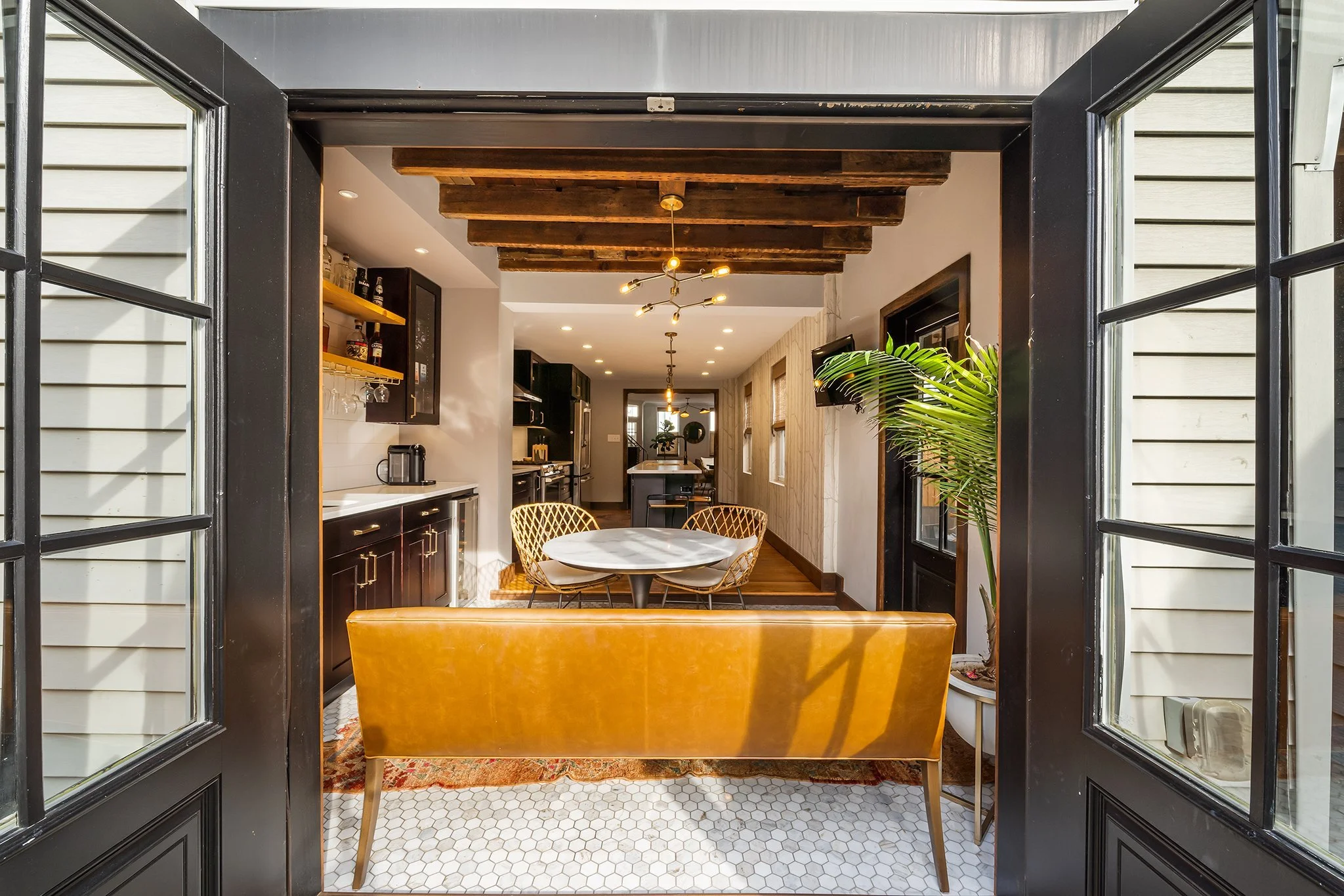
As interest rates tick up, you may start to think owning a home is out of reach. But a rate buydown could help make things a little more manageable by lowering your interest rate and saving you money on your monthly mortgage payment.
What is a Rate Buy down?
A rate buydown is when an upfront fee is paid to lower your mortgage interest rate. There are two types of buydowns: temporary and permanent. Both can offer some real advantages, depending on your situation.
Permanent Buydown
A permanent buy down is a one-time fee paid at closing that lowers your interest rate for the life of the loan. It's typically purchased by the buyer, but a seller can also offer a permanent buydown as an incentive.
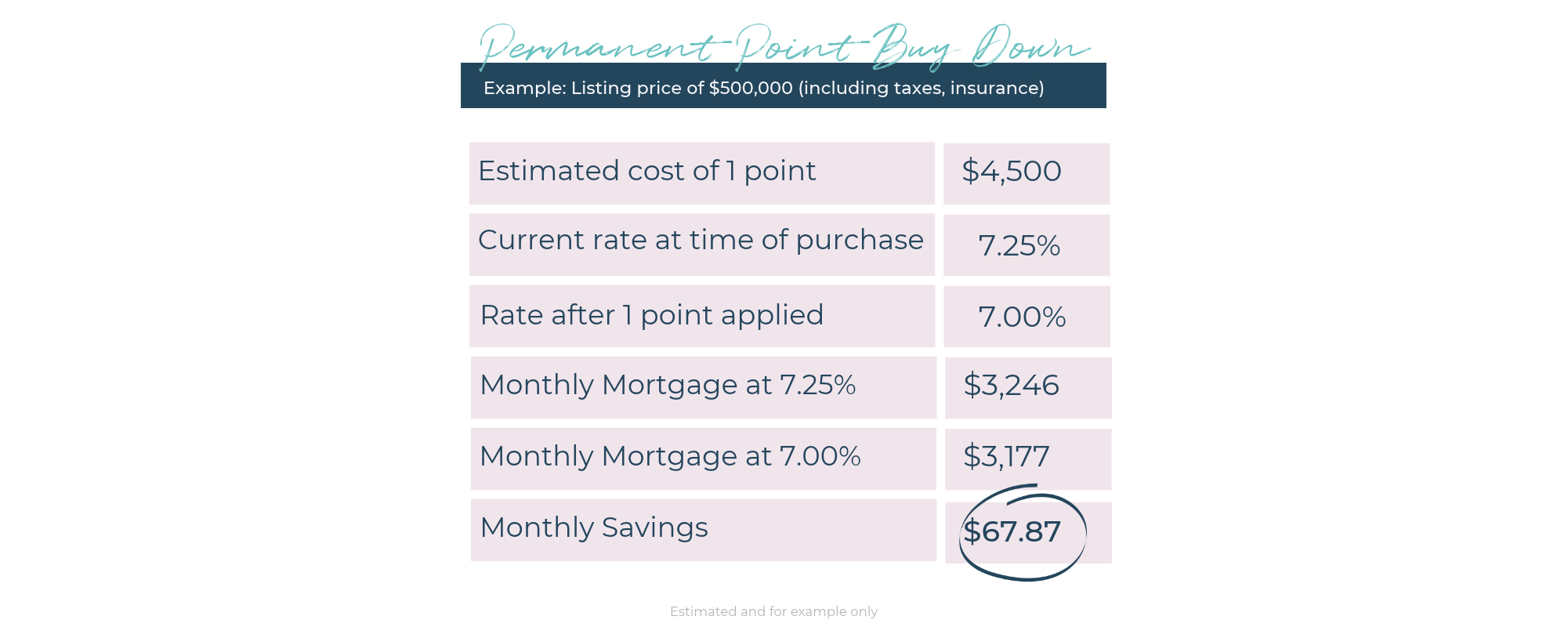
Mortgage points are purchased to lower your rate, with each point on average reducing your interest rate by about 0.25% (this can vary from lender to lender). So, what does it cost? Typically, one point equals 1% of your loan amount. For example, if you're purchasing a $500,000 home, and putting 10% down, one point would cost $4,500. Although the example above shows the effect of 1 point for clarity, buyers often purchase multiple points to make a bigger dent in their interest rate and monthly payment.
Here's how that would break down in your monthly mortgage payment:
Temporary Buydown
A temporary buy down also lowers your mortgage rate, but only for the first few years of the loan. It's often offered by sellers or builders as an incentive for buyers. We also have two preferred lenders who offer temporary buy downs for buyers and sellers! More on that below.
Temporary buy downs work a little differently. Instead of permanently lowering your rate, a chunk of money is set aside in an escrow account to cover part of your mortgage payment for a set period of time. This allows you to make smaller payments upfront while your actual loan rate stays the same.
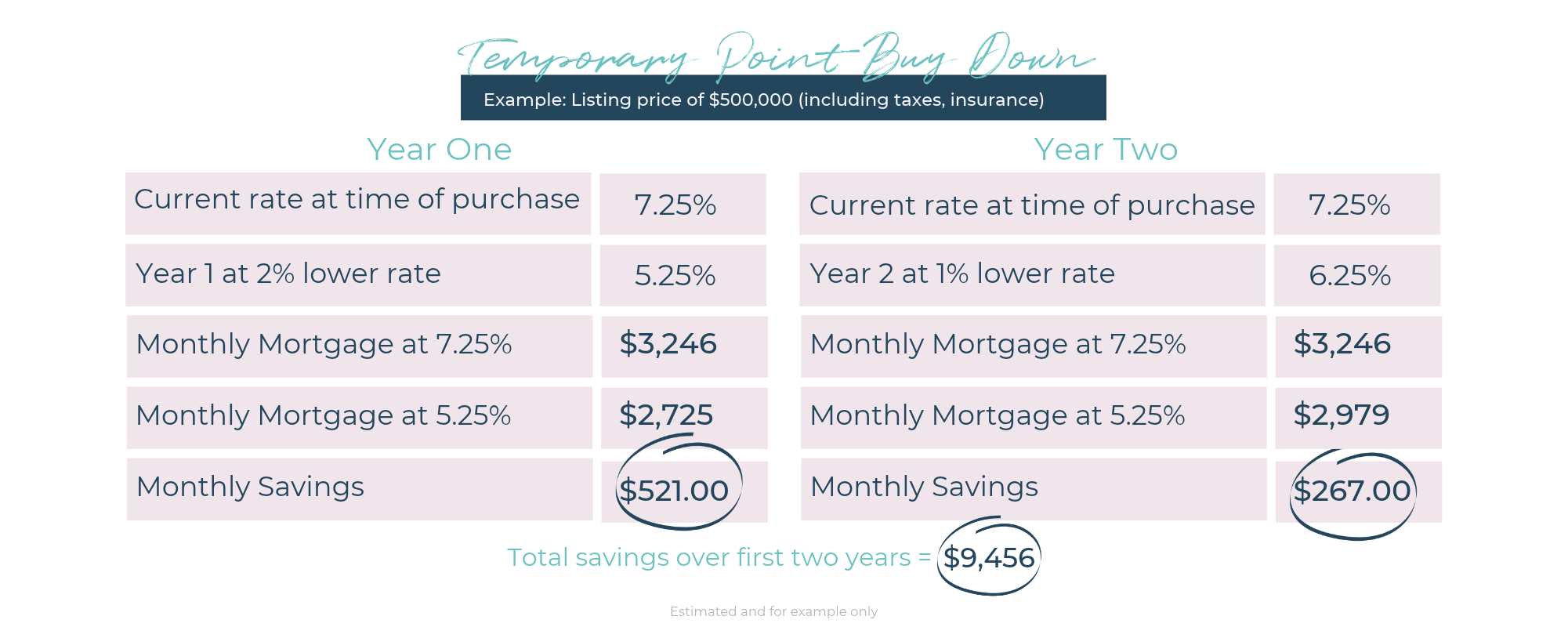
A 2-1 buy down, for example, means your interest rate is 2% lower in year one and 1% lower in year two. In year three, it returns to the original fixed rate. That means your rate goes back to whatever it was when you purchased your home. So, if you went under contract when rates were 7.25%, that's the rate you'll have in year three.
Here's how it breaks down:
How Do You Use Points to Your Advantage?
Now we get into the mind meld of explaining how to apply a buydown to your deal. Stay with us, it's worth it!
You're a Buyer Using Our Preferred Lender
Let's say you find an incredible Philly Home Girls listing. The listing agent lets you know that if you use our preferred lender, Tara Gore, from Movement Mortgage, will cover the cost of a temporary buydown for one year. There's no cost to you! That means your mortgage rate for the first year will be about 1% lower than the rate at the time of purchase.
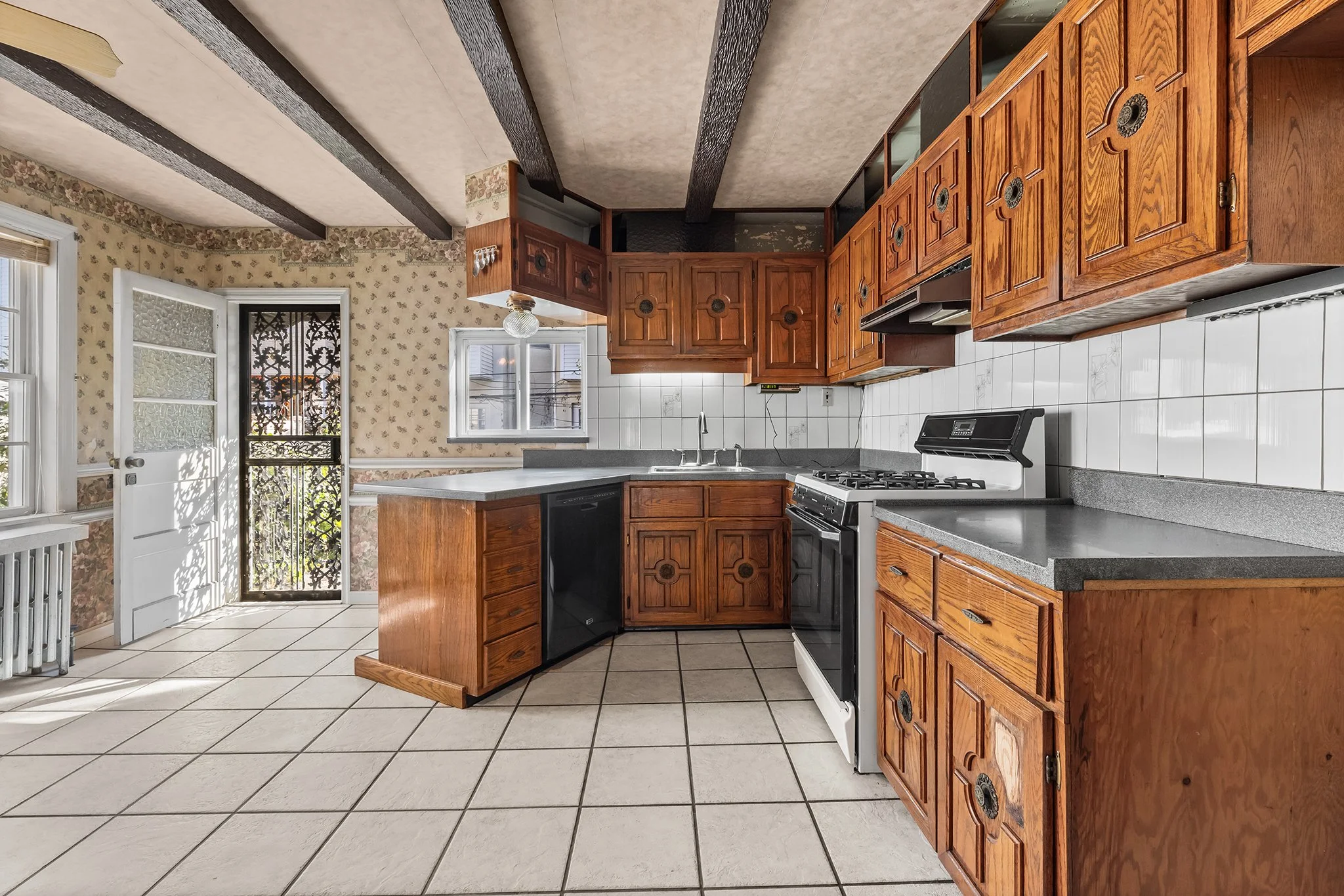
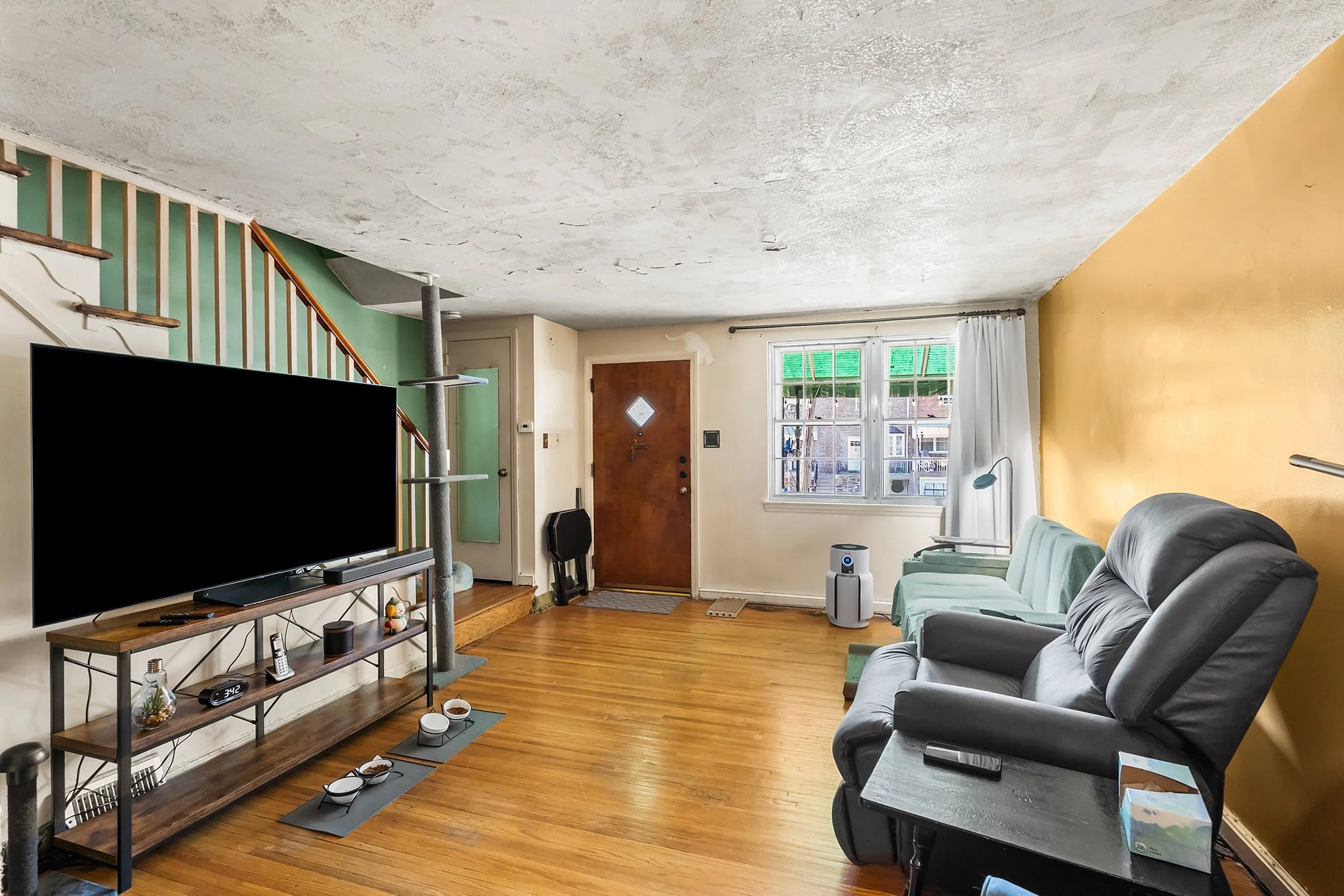
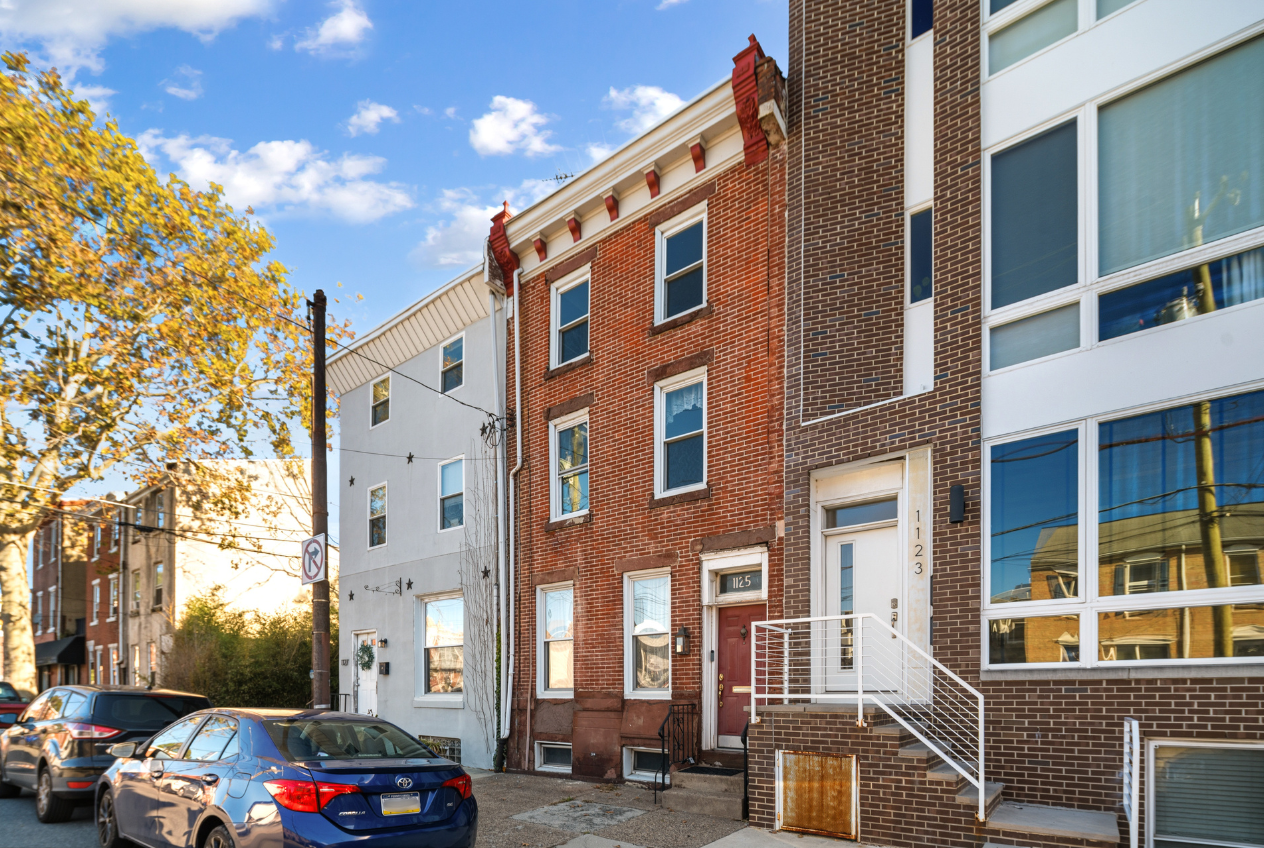
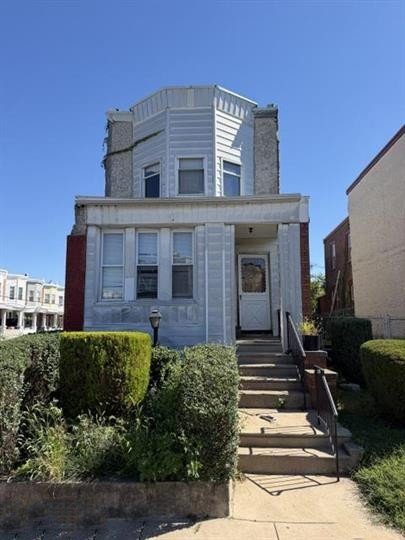
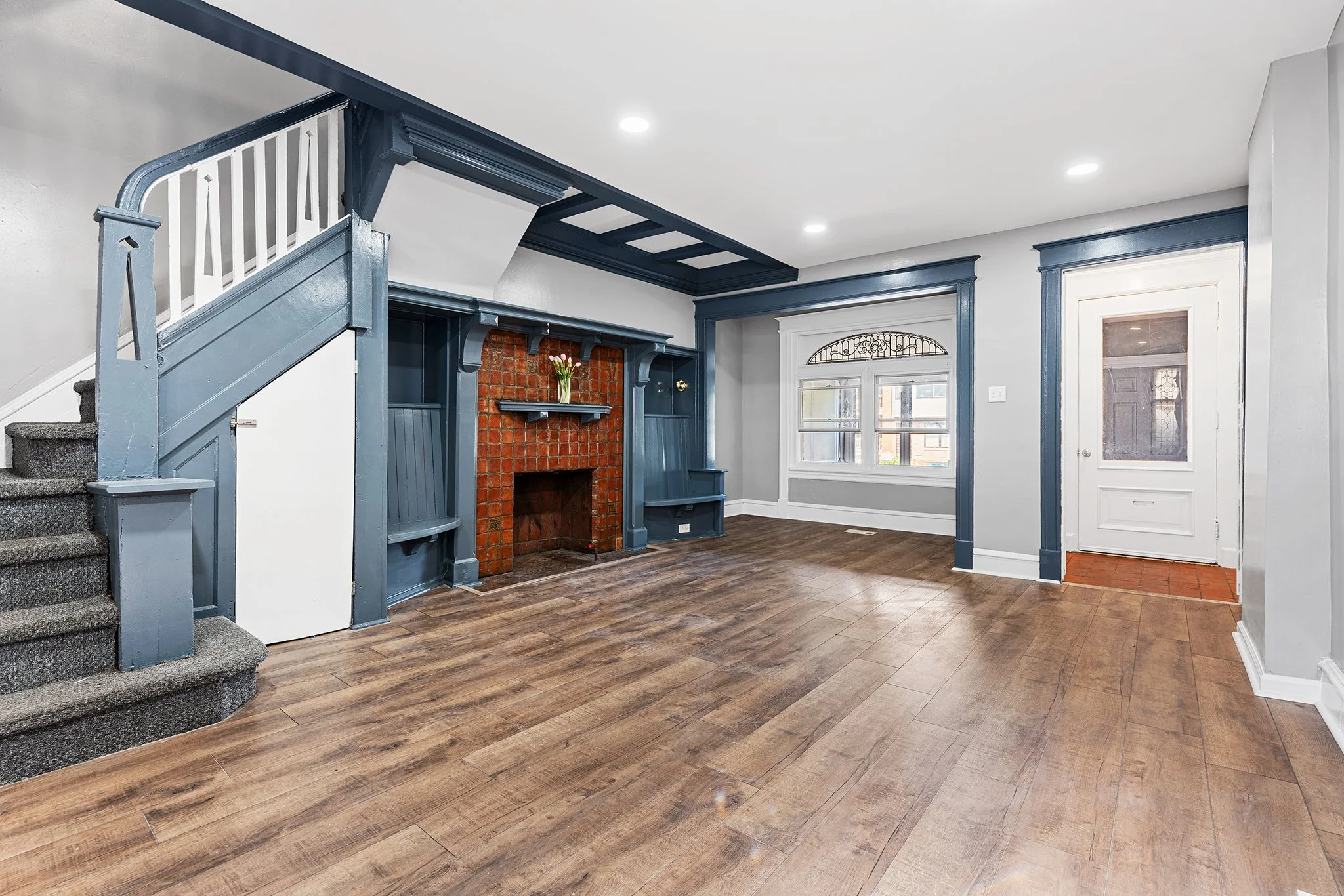
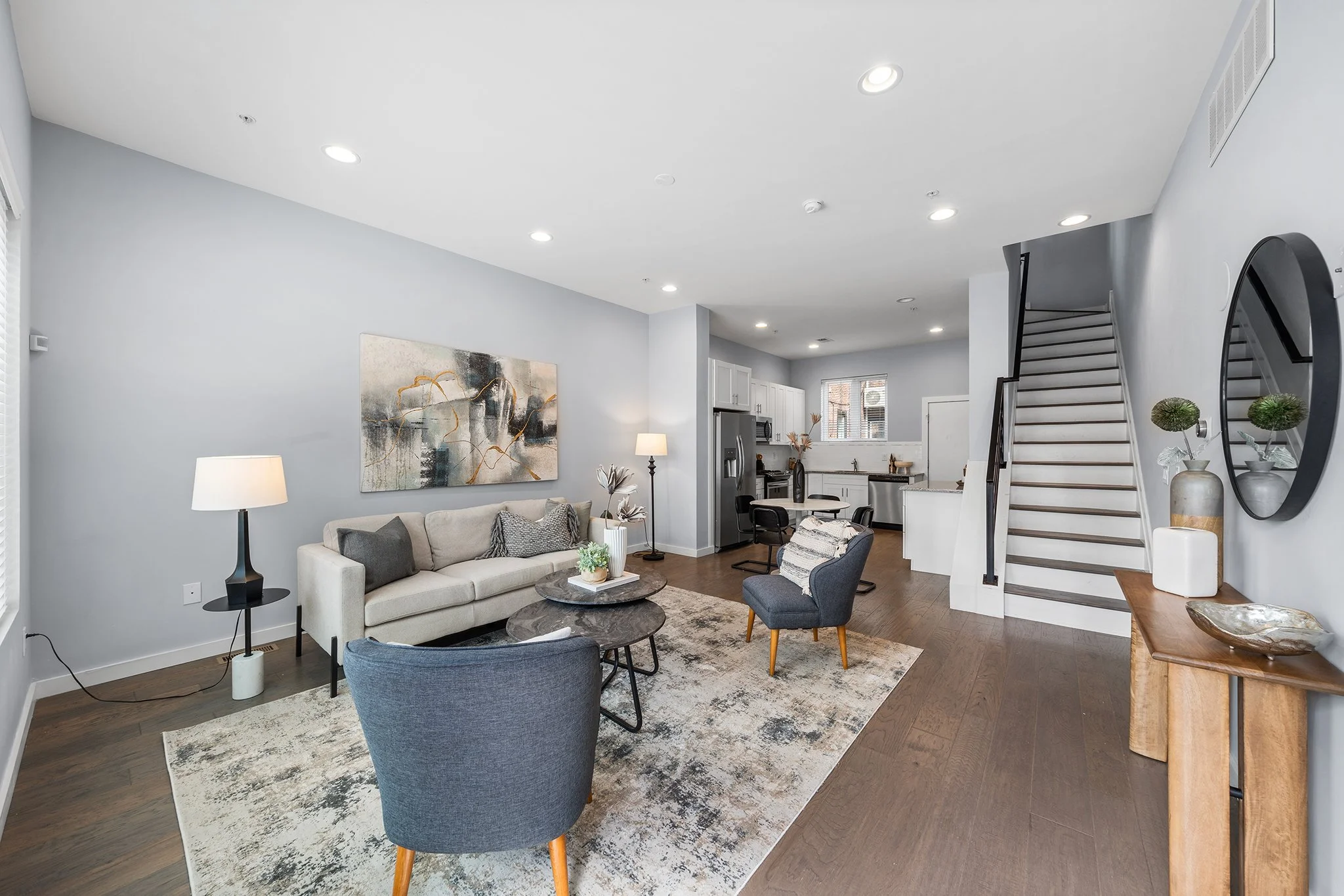
Let’s take a look using 3411 West Lippincott Street as an example:
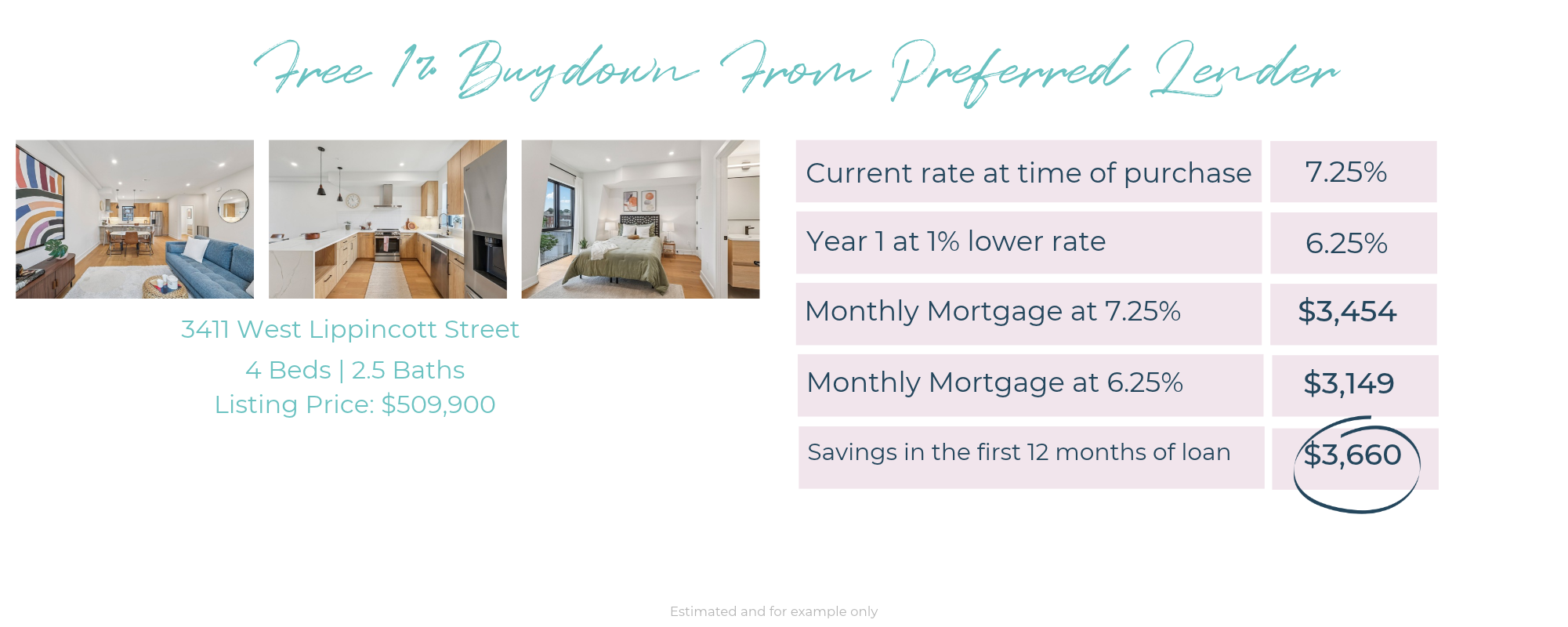
Now, the question we often get is, "But what happens after that first year?" Well, you could be ahead of the game if interest rates have continued to climb. You've locked in the rate that was available when you purchased, while saving $3,660 along the way. That means you would also have a lower rate than buyers entering the market at that point. What if rates go down during that first year? You can refinance at any time. So for example, if rates happen to dip to 6.25% or lower within six months after you've purchased, you could refinance at that lower rate.
Here's another little bonus: if you refinance before the temporary buydown funds have been used up, the remaining balance doesn't simply disappear. It's applied toward the principal of your loan. Even more savings!
What If You're the Seller? Is It Smart to Offer Points?
When interest rates are higher, buyers tend to hold back. After all, the monthly mortgage payment on a home purchased at 7.25% looks very different from one purchased a few years ago at 3.25%. (On a $400K home, that's roughly an $800 monthly difference!)
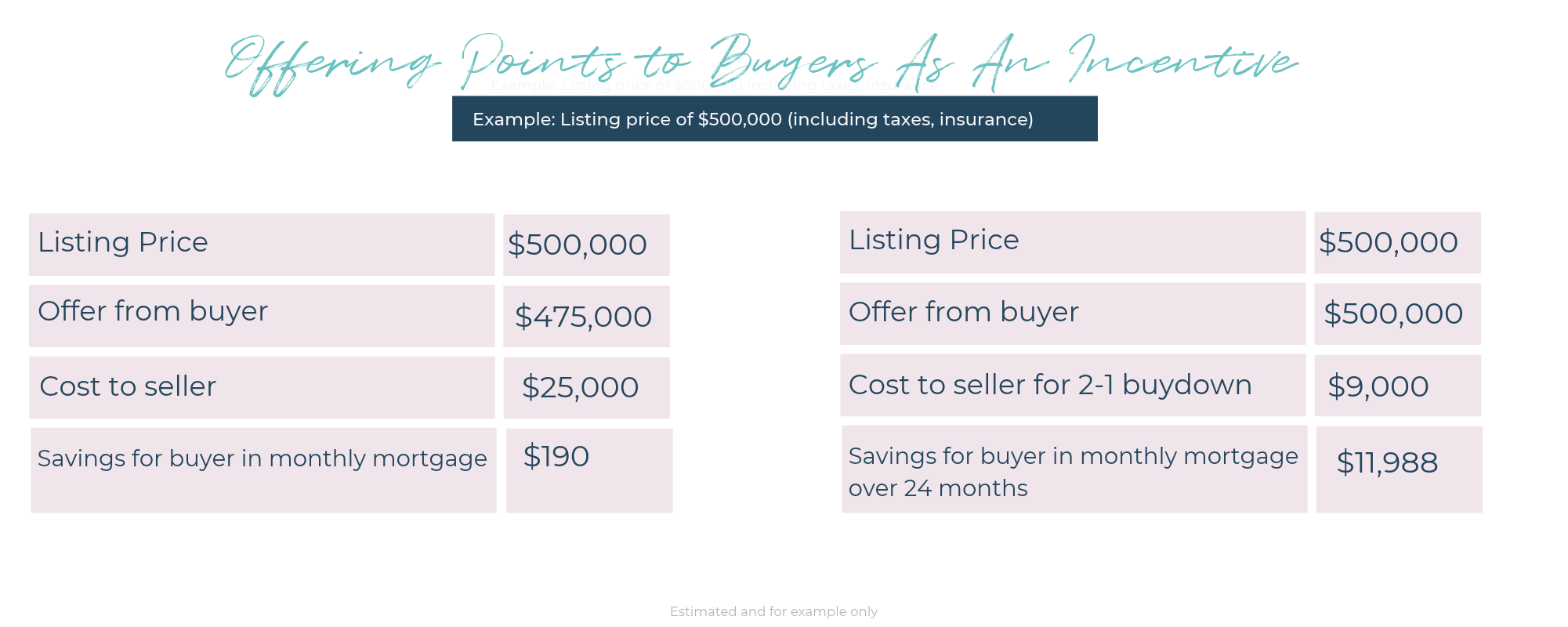
Because of that, buyers are looking for incentives to make the numbers work. The most common approaches are submitting an offer below asking price or requesting a seller's assist. Here is where preferred lender David Frankel, from Rate’s offer of a 2-1 buydown works it’s magic on both the seller and buyer side.
For example, your home is listed at $500K and an offer comes in at $475K. That's a $25,000 price reduction, which saves the buyer about $190 a month while costing you $25,000 in sale proceeds. Now, compare that with offering a 2-1 temporary buydown instead. Paid for by the you the seller, a 2-1 buydown typically costs about 2% of the mortgage amount. In this case that’s about $9k which is considerably less than $25,000, while saving the buyer just over $550 a month in the first year. The second year saves $443 a month, which is a savings of $11,988 over the span of 2 years.
That's a pretty significant difference in how far your money can go for both sides!
What If You Want to Buy Points for a Permanent Buydown?
Any lender that PHG recommends will happily work out the cost of purchasing points to lower your rate. But there's one important rule of thumb when deciding if it's worth doing: How long do you see yourself staying in the home? You’ll want to ask yourself this question so you can calculate the cost of points vs the savings you are receiving from them.
Let's use a home that has a listing price of $675,000 as an example. To get a meaningful reduction in your monthly payment, we’ll calculate as though you purchased two points that allowed for a .5% reduction.
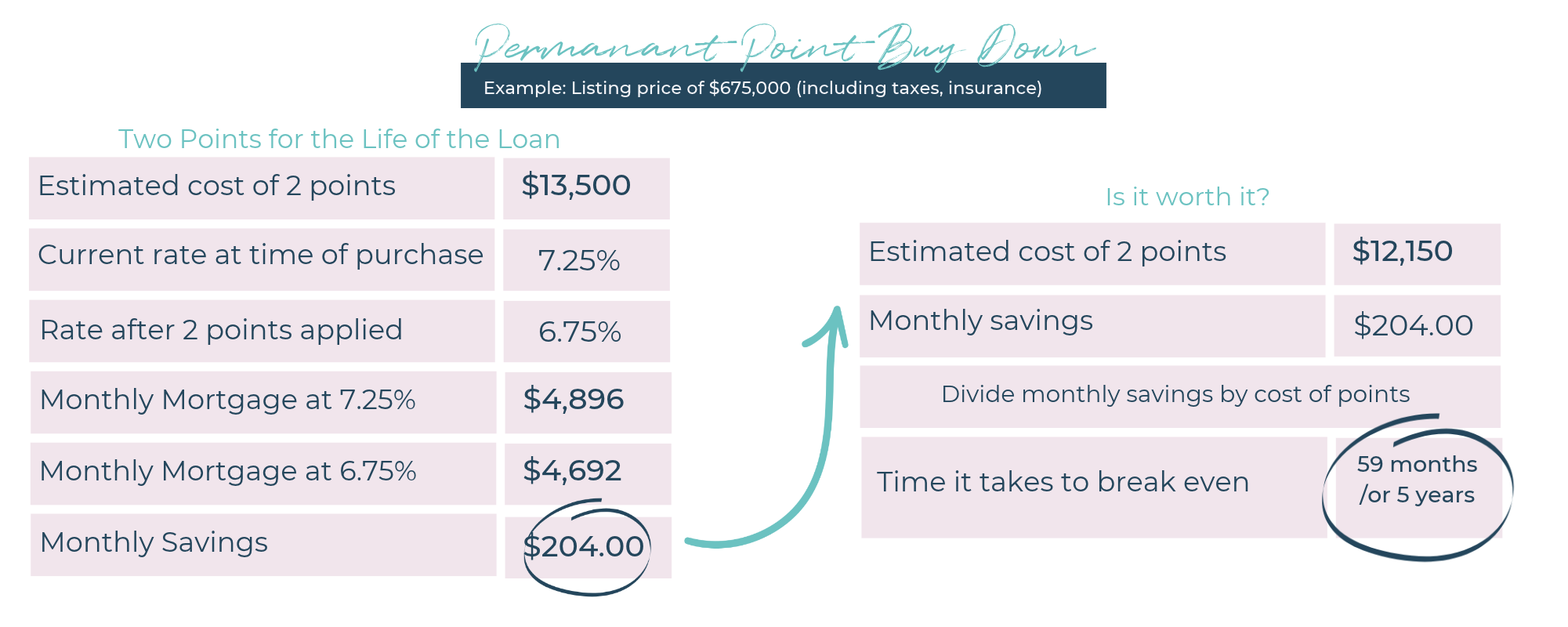
So, if you're planning to stay in your home for 10 years, purchasing points could be a worthwhile investment. But if you're thinking you'll move in 5 years, it’s not the most cost-effective move.
One other thing to keep in mind: if you plan on refinancing, the money you spent purchasing permanent points doesn't transfer to your new mortgage. It's considered money already spent. Unlike the remaining balance of a temporary buydown, it won't be applied to your loan principal.


At the end of the day, a rate buydown can be a really useful tool for both buyers and sellers. For buyers, it can mean lower monthly payments and a little more breathing room. For sellers, it can be a way to make your home more attractive to buyers without taking a big hit on your asking price. The trick is knowing which option makes the most sense for your situation. And that's where having a good agent and a trusted lender in your corner can make all the difference. There are more ways to make the numbers work than you might think!
Below we share our recommended lenders that are mentioned in the above scenarios. If you’d like to speak with an agent first to find out if mortgage points are for you, don’t hesitate to contact us.















As interest rates tick up, you may start to think owning a home is out of reach. But a rate buydown could help make things a little more manageable by lowering your interest rate and saving you money on your monthly mortgage payment.